Behavioral Evolution
Diversification of mating behaviors during speciation.
In many amphibians, reproductive isolation begins with mating behavior. Males produce advertisement calls, females evaluate those calls, and selection can change both signals and preferences among populations. Where closely related species co-occur, hybridization is often costly. Selection against hybrids can then increase premating isolation in sympatry—a process termed reinforcement. The same process can also generate behavioral differences among conspecific populations that encounter different species assemblages. We study this process in frogs using field recordings of advertisement calls and phonotaxis tests of female preference. Complementary projects examine how auditory circuits encode those behaviors and whether additional signals, including biofluorescence, are tuned to ecological conditions and to receiver sensory systems.
Incipient adaptive radiation driven by reinforcement
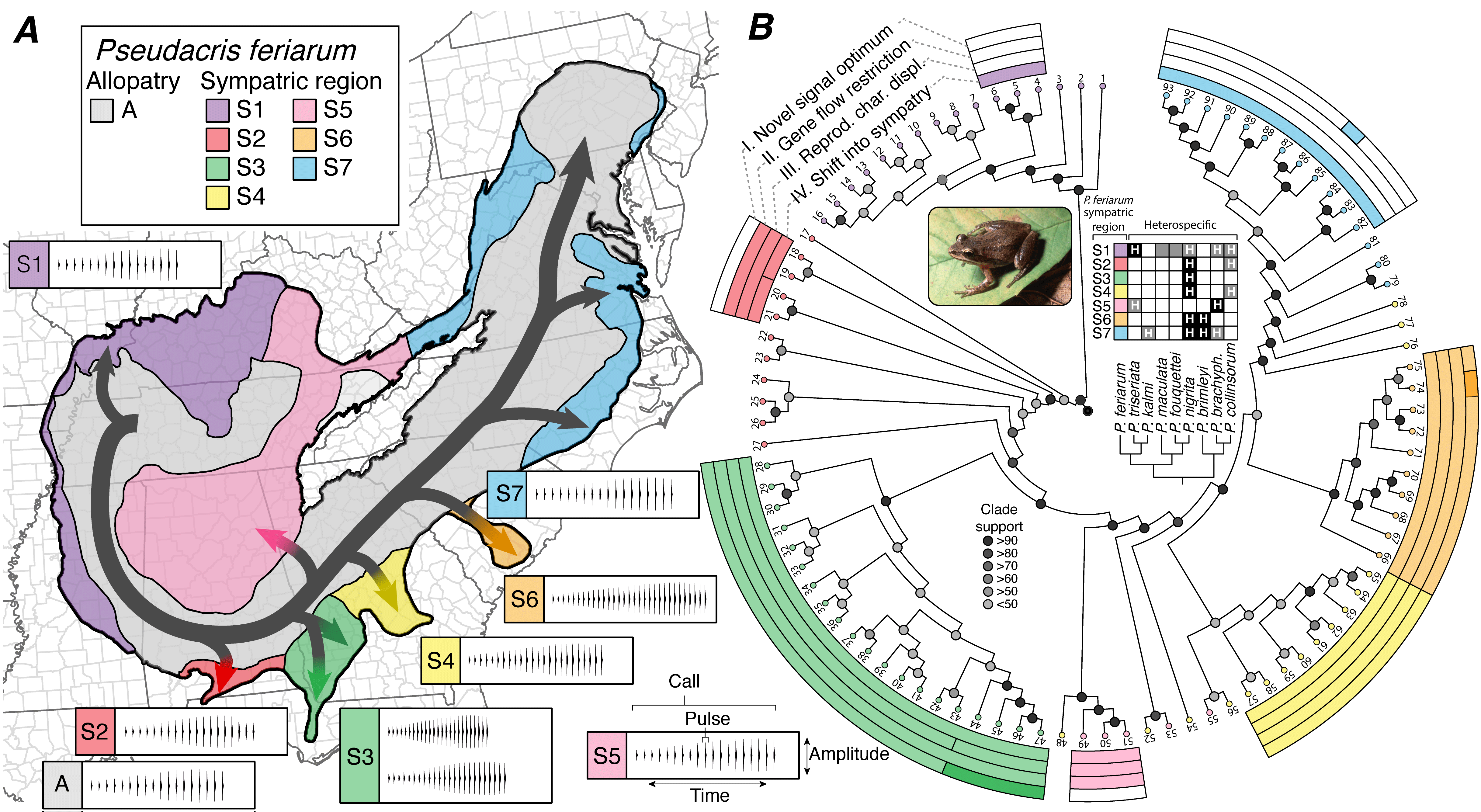
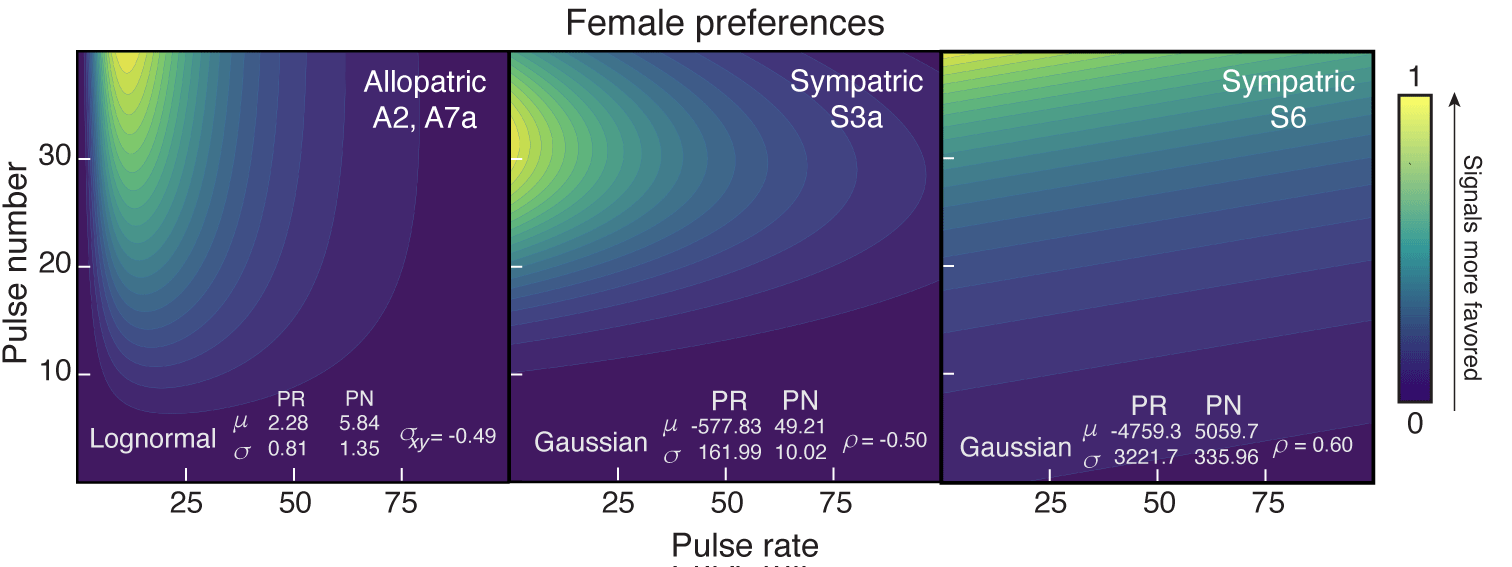
Can cascade reinforcement start an adaptive radiation? Cascade reinforcement occurs when selection against hybridization pushes mating signals apart not only between species, but among populations of the same species that meet different neighbors. In the Upland chorus frog (Pseudacris feriarum), this process has happened repeatedly. The species expanded into the ranges of related chorus frogs seven times. In each contact zone, male calls and female preferences shifted away from the local species, while populations living alone kept a single ancestral call. Call evolution sped up at first contact, and the new signals now isolate conspecific populations from one another as well as from other species. A mosaic of species interactions can therefore generate the early stages of an adaptive radiation. Manuscript in review.
Evolution of biofluorescent signals in anurans
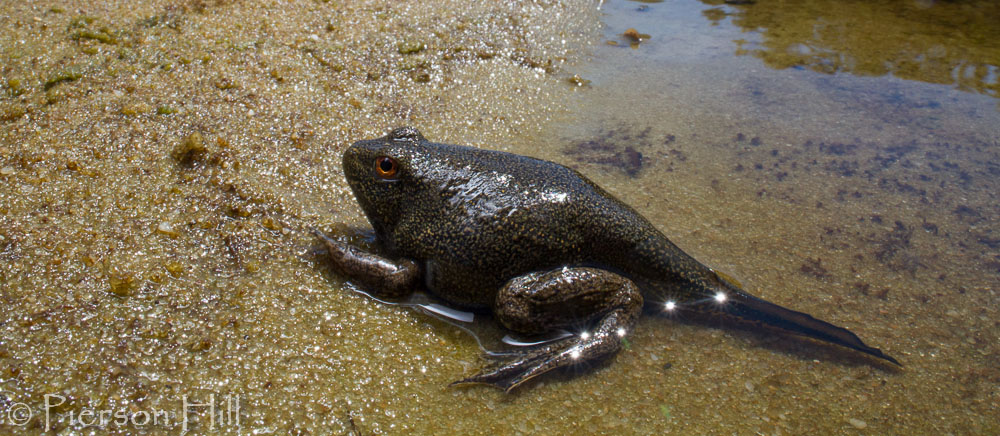
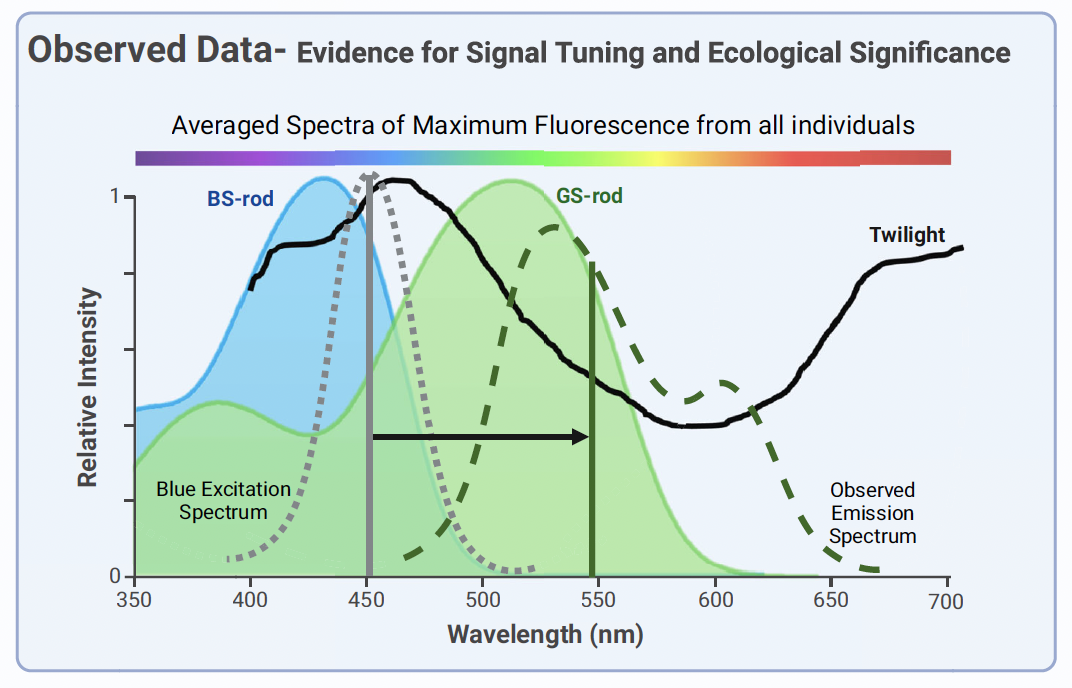
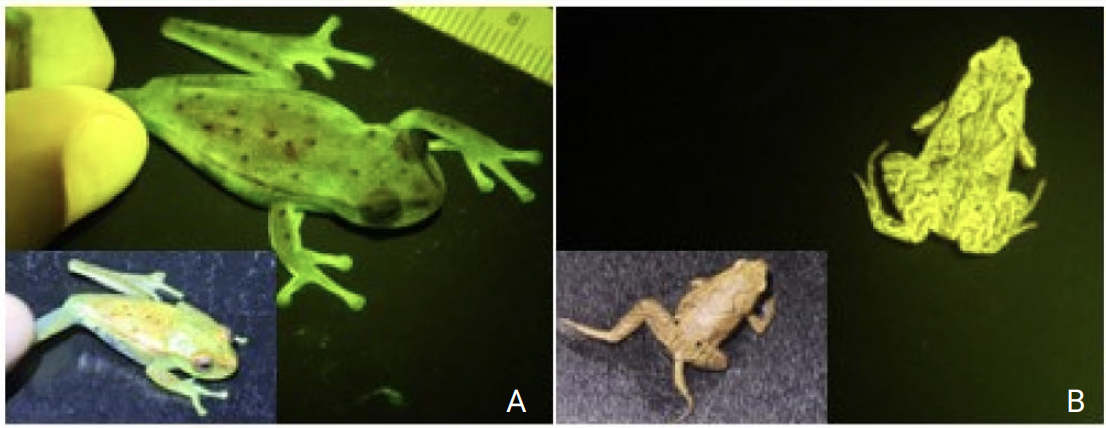
Are biofluorescent signals in frogs ecologically functional, and have they influenced lineage diversification? Biofluorescence occurs when tissue absorbs short-wavelength light and re-emits it at longer wavelengths. It is distinct from bioluminescence, which generates light chemically. Field surveys across South America show that fluorescence is widespread among anurans rather than restricted to a few species. Excitation is often strongest at twilight wavelengths, when many frogs are active, and emission overlaps both a region of low ambient light and the peak sensitivity of green-sensitive rods in the anuran eye. These properties are consistent with ecological tuning of the signal to habitat and to the receiver. Current work tests function and evolutionary consequence: whether fluorescence alters predation risk, whether it contributes to communication or mate choice, and, using a phylogeny of the treefrog genus Dendropsophus, whether fluorescent lineages diversify faster than non-fluorescent relatives. Selected paper: Whitcher et al. 2024, Nature Communications.
Impact of environmental conditions on behavioral isolation
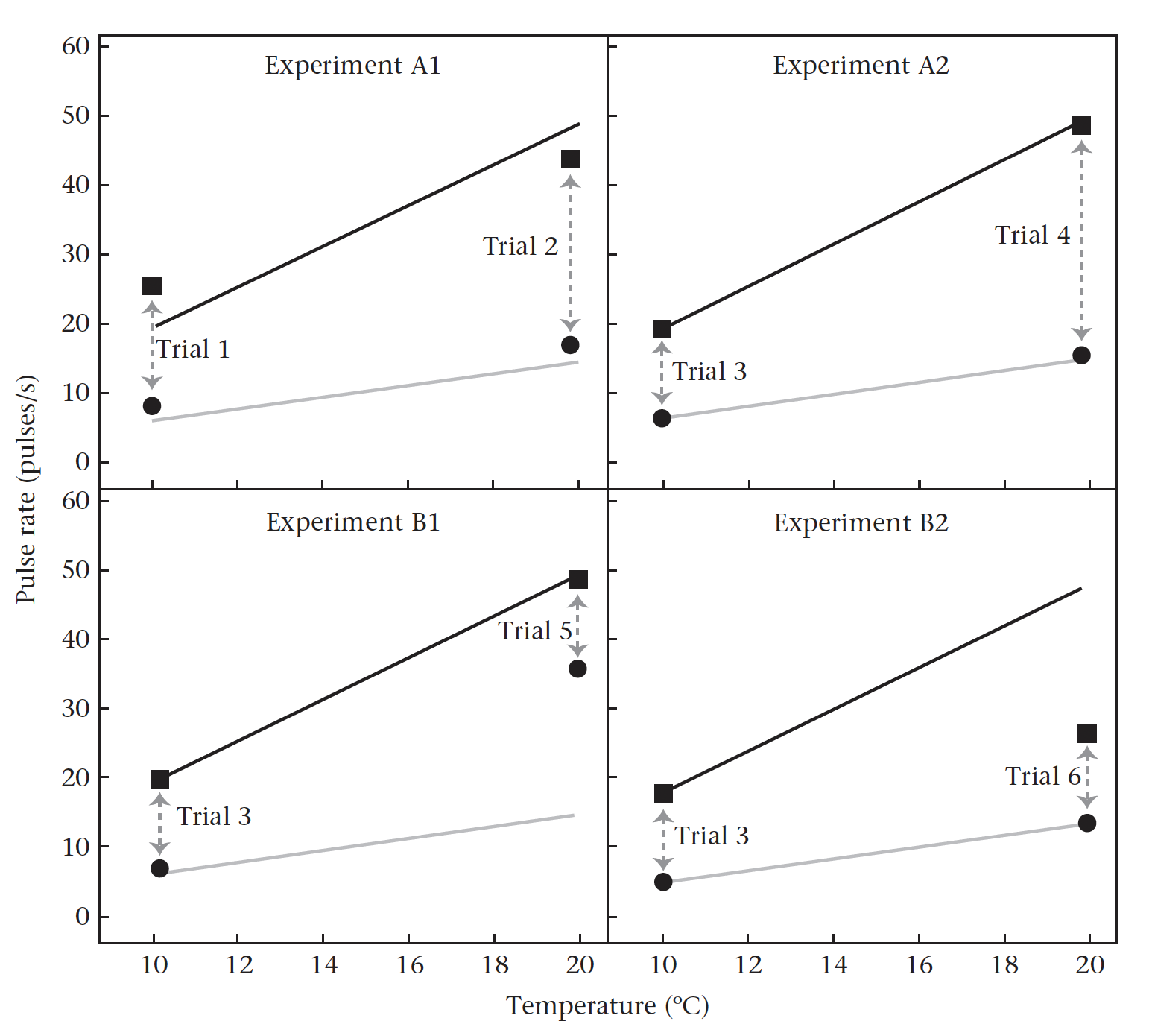
Does temperature affect species recognition in chorus frogs? Male advertisement calls vary with temperature, so the acoustic difference between Upland chorus frogs (Pseudacris feriarum) and Southern chorus frogs (P. nigrita) is smaller at low temperatures than at high temperatures. The two species hybridize in contact zones, and reinforcement has increased divergence of calls and female preferences in sympatry. A remaining question is whether cold conditions reduce that isolation by making the calls more similar. Phonotaxis experiments show that sympatric female P. feriarum prefer the conspecific call at both 10 °C and 20 °C. Discrimination is therefore maintained when signals converge. Decision time, however, approximately doubles under the colder condition. In a breeding chorus, longer sampling time may increase the probability of interspecific mating even when preference for the conspecific signal remains intact. Selected paper: Dye et al. 2024, Animal Behaviour.